Friday, 24 October 2025, 12:00-1:30pm
On Zoom
Busy Doctors: Time in Islamic Clinical Cultures
Ahmed Ragab, MD, PhD, Associate Professor, Institute of the History of Medicine, Johns Hopkins
Saturday, 1 November 2025, 4:00-6:00pm
On Zoom & at The Huntington Library, Art Museum, and Botanical Gardens 1151 Oxford Rd, San Marino, CA 91108, Room TBD
Did the Soul Die in the 1990s? The Making (and Unmaking) of So-Called ‘Consciousness Studies’
Anne Harrington, PhD, Franklin L. Ford Professor of the History of Science, Harvard University
Friday, 5 December 2025, 12:00-1:30pm
OPEN TO THE PUBLIC & FREE WITH REGISTRATION/RESERVATION
On Zoom
Greco-Indian Pharmaceutical Trade
Colin Webster, PhD, Associate Professor, Classics, UC Davis
Friday, December 5, 2025, noon-1:30pm [on Zoom]Colin Webster, PhD, Associate Professor, Classics, UC DavisTitle: “Greco-Indian Pharmaceutical Trade” Spring 2026
Friday, 5 September 2025, 12:00-1:30pm
On Zoom & at The Huntington Library, Art Museum, and Botanical Gardens 1151 Oxford Rd, San Marino, CA 91108, Room TBD
The Purpose of the Pelvic Exam: A Historical Analysis
Wendy Kline, PhD, Professor, Purdue; 2025-26 Molina Fellow, Huntington Library
Sunday, 18 May 2025, 4:00-6:00pm
Museum Lecture Hall, Getty Research Institute 1200 Getty Center Dr #1100, Los Angeles, CA 90049
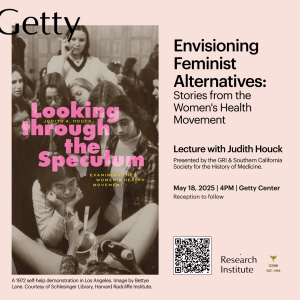
Envisioning Feminist Alternatives: Stories from the Women’s Health Movement
{Recording} Join Professor Judith Houck (University of Wisconsin, Madison) for this lecture jointly sponsored by the Southern California Society for the History of Medicine (SCSHM) and the Getty Research Institute. The program is inspired by the liberating acts of self-representation performed by feminist artists held in the Getty Research Institute’s special collections.
This lecture will be followed by a reception.
Saturday, 16 November 2024, 4:00-6:00pm
The African Diaspora and the History of Medicine in the Longue Durée
Pablo Gómez, associate professor of history and the history of medicine at the University of Wisconsin–Madison, examines how the African diaspora and the transatlantic slave trade shaped medical practice and ideas about the human body in the early modern Atlantic World. People of African descent produced some of the region’s dominant healing systems during the 17th and 18th centuries. At the same time, the ideas and practices of South Atlantic slave traders were essential for the appearance of the fundamental notions behind the rise of biomedicine, public health, and political economy.
Saturday, 28 October 2023, 2:00-4:30pm
Syringe Tides: Disposable Technologies and the Making of Medical Waste
Join Dr. Jeremy Greene, Professor of the History of Medicine at Johns Hopkins University, for this Southern California Society for the History of Medicine (SCSHM) lecture that traces the transformation of the single-use syringe from a new public health technology into just another form of trash
The lecture will be followed by a show-and-tell of related items from The Huntington’s collections with Molina Curator for the History of Medicine and Allied Sciences, Dr. Joel A. Klein.
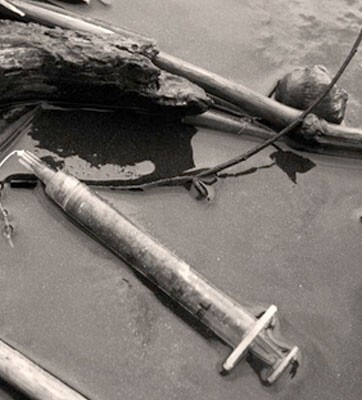
How does medical technology become medical waste?
Early in the summer of 1987, a few stray plastic syringes washed ashore on the New Jersey coastline. Within weeks, hundreds and then thousands followed, leading to the closure of a 50-mile stretch of beaches during peak tourist season.
Just a few decades earlier, these syringes would have been reusable glass-and-steel devices sterilized between uses. But with the marketing of plastic syringes in the 1960s and an explosion of demand for single-use medical plastics in the 1970s, the single-use syringe had become the most visible form of medical waste by the late 1980s, now swelling the landfills of New York City and occasionally making the short ocean migration to the Jersey Shore.
As newspapers and TV news made these syringe tides into media events, the initial promise that disposable devices would protect people from contamination was inverted, and used needles on the shore now threatened to infect passing beachgoers with hepatitis and AIDS.
The crisis of the syringe tides would lead to a series of House-Senate hearings, the 1988 passage of the Ocean Dumping Ban Act and Medical Waste Tracking Act, and new federal definitions of “medical waste” as a legal category.
Using media coverage, legal documents, and thousands of pages of legislative hearings, Greene traces the transformation of the single-use syringe from a new public health technology into just another form of trash.
Sunday, October 16, 2022 3PM, FREE & OPEN TO THE PUBLIC
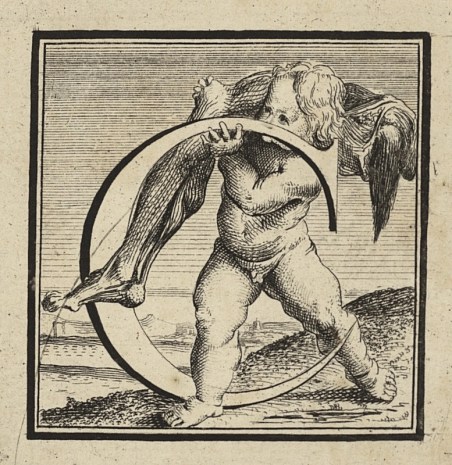
Beyond Scandal, a Reputation Redeemed: William Cowper (1666/67-1710), Anatomist, Surgeon, and Draftsman
By Dr. Monique Kornell, Art Historian and Visiting Associate Professor, Program in the History of Medicine, Cedars-Sinai Medical Center, Los Angeles
The English surgeon and anatomist William Cowper (1666/67-1710), a member of the Royal Society, was highly regarded in his day. A talented anatomical draftsman, who illustrated his own works and contributed to the works of his contemporaries, such as physician and comparative anatomist Edward Tyson (1651-1708) and physician James Drake (1667-1708), Cowper has been ironically cast as an “anatomical plagiarist” in modern times for providing English commentary to plates previously published by the Dutch anatomist Govard Bidloo (1649-1713) – an episode that has overshadowed his original contributions. This talk will reexamine this significant figure with a focus on the illustrated documentation of his work in print and in manuscript.
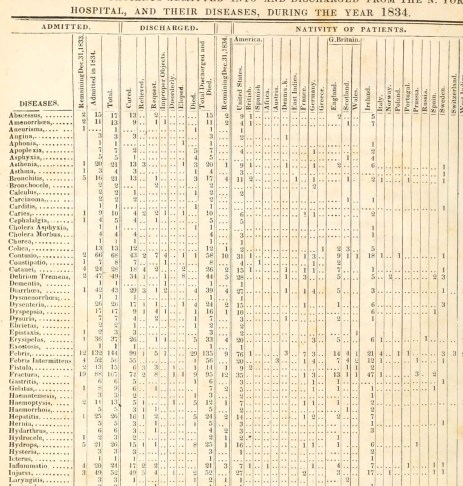
Preserving the Past: An Exploration of Medical Archives
By Lisa Mix, Independent Archivist
What you can find in medical archives and who takes care of them? Medical archives document the history of health care practice, education, professional associations, and more. They tell the stories of practitioners, patients, institutions, and places. This talk will explore the vast array of treasures held in medical historical collections – the raw materials for the history of medicine. Lisa Mix will discuss the many uses of medical archives and the role of archivists in preserving these resources and making them available. She will draw upon her experience as an archivist at 3 academic medical centers on 2 coasts, and also highlight key digital resources and some local gems.
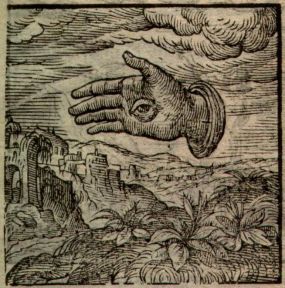
Atoms, Lies, and Hands with Eyes: Daniel Sennert’s Chymical Reform of 17th Century Medicine
By Joel A. Klein, Molina Curator for the History of Medicine and Allied Sciences, The Huntington
Faced with intransigent traditionalists on the one hand and brash innovators on the other, the Wittenberg profsor of medicine Daniel Sennert (1572-1637) sought a major reform of medicine rooted in alchemy, atomism, and experiments. This talk focuses on Sennert’s published works as well as his long-neglected correspondence to historicize the culture of chymical medicine at a major center of medical education in The Holy Roman Empire. Sennert – who was sometimes called the “German Galen” – has been remembered for his influential corpuscular theory, his careful description of scarlet fever, and his supervision of one of the first successful cesarean sections in Germany. He also offered one of the first courses on chymistry at a university and spent the majority of his career seeking a universal medicine and other alchemical drugs. Driven by his Lutheran faith and his belief in the public good, he clashed with secretive practitioners attempting to profit off the sale of clandestine remedies as well as charlatans attempting to defraud patients or physicians. Even so, his attempts to reform medicine led to a protracted controversy in which he was formally charged with blasphemy and heresy.
 Southern California Society for the History of Medicine